
Some of the fintechs that will get impacted include Cred, Paytm, Phonepe and Amazon Pay, among others.
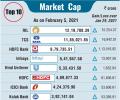
Reliance Industries Limited was leading the chart of the top-10 valued domestic companies, followed by Tata Consultancy Services, HDFC Bank, Infosys, Hindustan Unilever Limited, HDFC, ICICI Bank, Kotak Mahindra Bank, State Bank of India and Bajaj Finance Limited.

The combined market capitalisation of BSE-listed companies hit an all-time high of Rs 343.48 lakh crore on Monday, amid a rally in equities after the BJP registered victory in assembly polls in three Hindi heartland states. Following the sharp uptick in the market, investors became richer by over Rs 5.81 lakh crore on Monday. The 30-share BSE Sensex jumped 1,383.93 points, or 2.05 per cent, to close at a lifetime high of 68,865.12.

Commemorating 75 years of India's independence, SBI has launched a 75-day Utsav Deposit Scheme, offering 6.10 per cent for fixed deposits. Senior citizens will get an additional 0.50 per cent and the offer is on until October 30, SBI said.

Kotak Mahindra Bank was the biggest loser from the Sensex pack, skidding 1.83 per cent, followed by Axis Bank, NTPC, Hindustan Unilever, ICICI Bank, Bharti Airtel, Reliance Industries, HCL Technologies, IndusInd Bank and Nestle. In contrast, Bajaj Finance, Bajaj Finserv, Tech Mahindra, Tata Consultancy Services, Titan, Infosys, HDFC Bank, HDFC and ITC were the gainers.

Industry leaders including Google's India-born chief executive Sundar Pichai on Wednesday mourned the death of Ratan Tata, saying the veteran industrialist cared about making India better. "He leaves an extraordinary business and philanthropic legacy and was instrumental in mentoring and developing the modern business leadership in India. He deeply cared about making India better," Pichai said in a post on X. Pichai recalled that his last meeting with Tata was at Google's office where they spoke about the progress of self-driving car Waymo.

Seven consecutive sessions of decline in the equity market has eroded the wealth of investors by a whopping Rs 10.42 lakh crore and the benchmark Sensex has tumbled more than 2,000 points during this period. Concerns over more rate hikes by developed economies, weak global equity markets and fresh foreign fund outflows from the domestic market have dented investor sentiments. On Monday, the BSE Sensex dropped 175.58 points or 0.30 per cent to end at 59,288.35 points, marking a decline for seven straight trading sessions.

Benchmark BSE Sensex and Nifty soared over 2.5 per cent, logging their best single-day gain in more than three months, on Tuesday after value buying in banking, IT and oil stocks. The 30-share Sensex jumped 1,564.45 points or 2.70 per cent to settle at 59,537.07. During the day, it zoomed 1,627.16 points or 2.80 per cent to 59,599.78. The broader NSE Nifty advanced 446.40 points or 2.58 per cent to 17,759.30.

The Sensex ended over 51 points lower on Monday while the Nifty settled flat amid a weak trend in global markets and continuous foreign fund outflows. Markets are awaiting the November inflation data to be announced later in the day, traders said. The 30-share BSE Sensex declined 51.10 points or 0.08 per cent to settle at 62,130.57. During the day, it tumbled 505.52 points or 0.81 per cent to 61,676.15. The broader NSE Nifty ended at 18,497.15, marginally higher by 0.55 points.

Benchmark indices fell over 1 per cent each on Monday in sync with weak global markets and a sharp fall in IT stocks. The BSE benchmark Sensex tanked 861.25 points or 1.46 per cent to settle at 57,972.62. During the day, it tumbled 1,466.4 points or 2.49 per cent to 57,367.47. Similarly, the NSE Nifty fell 246 points or 1.4 per cent to 17,312.90.

Investors became richer by nearly Rs 8 lakh crore on Wednesday as benchmark BSE Sensex surged by 740 points amid value buying in utilities and power shares and a strong trend in global markets. The 30-share BSE Sensex surged by 740.30 points or 1.01 per cent to close at 73,730.23.

While about 8,000 people are in the long list of invitees, the select list features 506 A-listers, including prominent politicians, leading industrialists, top film stars, sportspersons, diplomats, judges and high priests.
Benchmark indices rallied on Thursday with the Sensex and Nifty climbing nearly 2 per cent, helped by heavy buying in Bajaj Finance shares amid a mixed trend in the global equity markets. The 30-share BSE benchmark jumped 1,041.47 points or 1.87 per cent to settle at 56,857.79. During the day, it rallied 1,097.9 points or 1.96 per cent to 56,914.22. The broader NSE Nifty advanced 287.80 points or 1.73 per cent to 16,929.60.

Brokerages expect a further slowdown in Indian firms' revenue and earnings growth in Q4FY25, following low single-digit growth in the preceding three quarters, as factors like weak consumer demand and credit growth linger on.

The market capitalisation of BSE-listed companies soared to an all-time high of Rs 406.52 lakh crore on Monday thanks to a rally in equities where the BSE Sensex climbed over 1 per cent. The 30-share BSE Sensex rallied 941.12 points or 1.28 per cent to finish at 74,671.28. During the day, it zoomed 990.99 points or 1.34 per cent to 74,721.15.

Benchmark indices bounced back after falling in early trade on Thursday and logged the fifth day of gain amid a decline in crude oil prices and foreign funds inflow. The 30-share BSE Sensex climbed 284.42 points or 0.51 per cent to settle at 55,681.95. During the day, it jumped 340.96 points or 0.61 per cent to 55,738.49. The broader NSE Nifty went higher by 84.40 points or 0.51 per cent to 16,605.25.

Among the Sensex firms, ITC, Kotak Mahindra Bank, ICICI Bank, Nestle, Axis Bank, IndusInd Bank, UltraTech Cement, Bajaj Finance, Maruti and HDFC Bank were the major laggards.

The current spurt in the stock market is on account of strong fundamentals and robust corporate earnings and retail investors can look for buying opportunities to accumulate quality stocks, experts said.

Kotak Mahindra Bank was the biggest loser in the Sensex pack, sliding 2.68 per cent, followed by Tech Mahindra, Mahindra & Mahindra, Axis Bank, Hindustan Unilever, Tata Motors, Tata Consultancy Services, Bajaj Finserv, Bajaj Finance, Nestle and Titan. In contrast, NTPC, Power Grid, Larsen & Toubro, HDFC, Reliance and HDFC Bank were the gainers.
From the Sensex pack, Bharti Airtel fell 3.42 and Kotak Mahindra Bank declined 3.31 per cent. ICICI Bank, ITC, HDFC Bank, UltraTech Cement, HCL Technologies and Maruti were the other major laggards. Tata Motors, Hindustan Unilever, Asian Paints, Sun Pharma, Nestle, Tata Consultancy Services, Wipro, Bajaj Finance, Axis Bank and IndusInd Bank were among the gainers.

Equity investors became poorer by over Rs 6.71 lakh crore on Thursday as domestic benchmark indices tumbled amid a global market meltdown. The 30-share BSE benchmark Sensex tanked 1,416.30 points or 2.61 per cent to settle at 52,792.23, tracking weak global markets and persistent foreign fund outflows. In line with the weak market trend, the market capitalisation of BSE-listed firms tumbled by Rs 6,71,051.73 crore to stand at Rs 2,49,06,394.08 crore.

Benchmark stock indices Sensex and Nifty fell for the third day running on Friday due to weak trends in global markets and soaring crude oil prices. Foreign fund outflows also weighed on investor sentiments amid strengthening US bond yields which are nearing 5 per cent for the first time since 2007. The 30-share BSE Sensex fell 231.62 points or 0.35 per cent to settle at 65,397.62.

Benchmark BSE Sensex rallied nearly 630 points while Nifty closed above the 16,500 mark on Wednesday after sharp gains in IT and energy shares amid positive global market trends. Buying in index majors Reliance Industries, Infosys and Tata Consultancy Services and FII inflows bolstered the sentiment. Shares of firms related to oil exploration and refineries were in heavy demand, with Reliance Industries rallying 2.47 per cent and ONGC by 4 per cent, as the government slashed windfall tax on petrol, diesel, jet fuel and crude oil.

From the Sensex pack, Larsen & Toubro jumped 4.26 per cent to emerge as the biggest gainer, followed by IndusInd Bank, Tech Mahindra, State Bank of India, HCL Technologies, Power Grid, NTPC, Axis Bank, Kotak Mahindra Bank, HDFC Bank and Wipro. Mahindra & Mahindra, Infosys, UltraTech Cement and Hindustan Unilever were the major laggards.

Benchmark BSE Sensex tumbled 566 points to settle below the 60,000-level on Wednesday, dragged down by heavy selling in banking and IT stocks amid weak global trends.

Equity indices faced a heavy drubbing on Thursday after an initial rally, with Sensex tanking 1,045.60 points amid a largely bearish trend overseas after the US Federal Reserve hiked rates by 75 basis points.

The index could be vulnerable to a bigger fall given the present market dynamics.

Equity indices failed to hold on to morning gains on Tuesday, with the Sensex falling 236 points amid a sell-off in IT stocks and weak trends from global markets. The 30-share BSE benchmark opened higher but could not carry forward the momentum and declined 236 points or 0.43 per cent to settle at 54,052.61. During the day, it hit a low of 53,886.28 and a high of 54,524.37. The broader NSE Nifty dropped 89.55 points or 0.55 per cent to end at 16,125.15.
IndusInd Bank was the top gainer in the Sensex pack, rallying up to 46 per cent. Other winners were Bharti Airtel, L&T, Bajaj Finance, Kotak Mahindra, Bajaj Auto, HUL and HDFC -- rising up to 10 per cent. On the other hand, Maruti Suzuki, Tech Mahindra, Sun Pharma and Reliance Industries closed with losses. NSE Nifty finished 323.60 points, or 3.89 per cent, up at 8,641.45.

Among the Sensex firms, Bajaj Finserv, Tata Motors, Asian Paints, ITC, IndusInd Bank, State Bank of India, Tata Steel, Wipro, Infosys and Maruti were the major gainers. Tech Mahindra, HCL Technologies, Kotak Mahindra Bank, Titan and Larsen & Toubro were the major laggards.

From the Sensex pack, Reliance Industries jumped the most by 3.78 per cent. Tata Steel, Bharti Airtel, IndusInd Bank, Kotak Mahindra Bank, UltraTech Cement, ICICI Bank and Tata Motors were the other biggest gainers. Titan, HCL Technologies, Power Grid, Tata Consultancy Services, Wipro, Hindustan Unilever, Axis Bank and Nestle were among the major laggards.

Privately, many bankers admit their immediate goal is not growth but slowing the erosion of Casa deposits, reveals Tamal Bandyopadhyay.

India's banking system is expected to remain unscathed from the troubles in Credit Suisse as it has a very small presence in the country, experts said. Although Credit Suisse is more relevant to India's financial system than Silicon Valley Bank (SVB), it has very limited operations, according to a report by Jefferies India. The Switzerland-based bank, the report said, "has less than Rs 20,000 crore in assets (12th among foreign banks), presence in the derivatives market and funded 60 per cent of assets from borrowings, of which 96 per cent are up to two months.
Benchmark stock indices Sensex and Nifty cut short their four-day gaining streak to close lower by half a per cent on Wednesday due to profit-taking in banking oil and metal stocks amid weak trends in global markets.

Equity benchmark BSE Sensex closed at an all-time high of 62,272.68 on Thursday, tracking a firm trend in global markets after the US Fed minutes indicated a slower pace of rate increase that bolstered investors' sentiment. Extending its rally to the third straight day, the 30-share BSE benchmark rallied 762.10 points or 1.24 per cent to settle at 62,272.68, its record closing peak. During the day, it jumped 901.75 points or 1.46 per cent to its lifetime high of 62,412.33.he broader NSE Nifty gained 216.85 points or 1.19 per cent to end at 18,484.10.

BharatPe has sacked Madhuri Jain Grover, wife of the fintech firm's co-founder and managing director Ashneer Grover, over alleged financial irregularities and cancelled ESOPs vested with her. Madhuri is alleged to have used company funds for personal beauty treatments, buying electronic items and family trips to the US and Dubai, sources with direct knowledge of the matter said. Besides, she also allegedly paid her personal staff out of company accounts and produced fake invoices from known/friendly parties, they added.

In May, MFs were the net sellers in several PSUs, as they deployed Rs 47,600 crore in equities during the month.
Benchmark indices continued to rally for the third day running on Friday with the Sensex climbing 619 points in early trade to reclaim the 57,000 level. The 30-share BSE benchmark jumped 619.27 points to 57,477.06. The broader NSE Nifty advanced 189.15 points to 17,118.75.

Benchmark indices bounced back on Wednesday after a two-day decline, with the Sensex and Nifty climbing nearly 1 per cent each, tracking a positive trend in European markets. Buying in IT and bank stocks also supported the recovery in equities. The 30-share BSE benchmark jumped 547.83 points or 0.99 per cent to settle at 55,816.32.
Benchmark BSE Sensex and Nifty closed lower by nearly 1 per cent on Tuesday amid fresh foreign fund outflows and mixed global trends. The 30-share BSE benchmark fell by 497.73 points or 0.89 per cent to settle at 55,268.49, extending its losses for second straight day. During the day, it tanked 562.79 points or 1 per cent to 55,203.43. The broader NSE Nifty declined by 147.15 points or 0.88 per cent to 16,483.85.
